London Drama News

London Drama Conference

DramaNow175a_logo

Drama Now! and the Way Ahead - more info and to book


Borough Drama

Is your borough organised for Drama? Does it provide INSET or CPD courses? London Drama can support the development of initiatives and programmes for drama in boroughs. Please contact us if you would like more information. 
Find out more


School Support

If your school would like to develop drama training please contact us. We will advise on or provide active resourcing.


Youth Theatres

Get Into Theatre helps you find out about career opportunities, work experience, training and much more.


New Publications

Drama to Inspire

Drama to Inspire: a London Drama Guide to excellent practice in drama for young people
Edited by John Coventon

This new book is a collection of practice based accounts by fifteen leading practitioners who have had a connection with London Drama, including Dorothy Heathcote, Jonothan Neelands, Andy Kempe and Daniel Shindler.

More info and/or buy here


Order


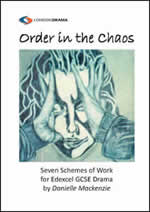
Order in the Chaos
by Danielle Mackenzie

This new practical resource book by Danielle Mackenzie published by London Drama provides teachers with seven exciting units of work and materials designed for the GCSE Edexcel Drama Examintion, New Specification, helping to organise "Order" in all that potential "Chaos".

Published as a downloadable E-Book.

More info and download here


Stanislavski_in_Practice150

Stanislavski in Practice: exercises for students
by Nick O'Brien

This book is an unparalleled step-by-step guide to Stanislavski’s System. Each element of the System is covered practically through studio exercises and jargon-free discussion.

More info and/or buy here


London Drama Members!

Get 5% discount on Drama to Inspire, Order in the Chaos, Stanislavski in Practice and all London Drama books. (Log in required.) Applies also to members of National Drama and English Speaking Board. Find out more

Primary Action Group

Earlier this term we held a Consultation Meeting [Meeting Notes] at the Crypt for any members who shared our concern over the current position of Primary Drama.

Primary Drama – once the fulcrum of the integrated curriculum in schools across the country - went into a kind of deep freeze when the national curriculum came in. For a good few years it remained fossilized in the memory of those who could recall the days when it energized disenchanted learners, carried those with language problems and engaged those with behavioural and concentration problems but there was ‘no time for it on the current timetable’. Drama teachers who knew the benefits of drama in the primary classroom stewed in frustration as they tried to explain that if you taught through drama it would save time on the curriculum, not spend it. However the boxed curriculum was here to stay for a while, policed by Ofsted and subjects taught in isolation soon produced teachers who knew nothing else themselves. However it is precisely this generation of teachers who sense that something is missing – they are the ones having to deal with increase disenchantment in their classrooms and where best else to turn for enchantment than drama? It is a welcome irony that teachers who never knew drama in their own primary classrooms are now calling for its return. Drama has a strange way of refusing to die.

Secondary school ASTs and drama specialists are doing what they can. A watered down secondary programme for drama may be enough for year six but essentially primary school drama is a different subject, requiring a different skills base from its secondary relation and these skills have not been taught at teacher training level for years now. While secondary drama grows backwards from theatre, primary drama grows upwards from play – the two should enjoy a most rich and healthy overlap in KS2 and3 where sadly we lack our expertise most.

We are fortunate enough to have not just as a member but also as a trustee for many years now, Carol Olivier who has been a deputy head in a primary school for many years…and, unusually, a Drama specialist. She is delighted to see that there is not only an interest but also a demand for primary drama skills to make a comeback. We are lucky indeed that she is happy to lead and shape this strand of development for us at London Drama.

However at our meeting what we thought was the case was indeed confirmed. When something has been put in the freezer too long, it has burnt on the edges, gone dry and has splintered in places. We all look at each other and ask – ‘Is it still alright to use this?’

The group started to pool together what they are doing – and yes we have thought tracking and hotseating and maybe some freeze frames – the occasional Thought Alley. (A few faces suggest we think this could all be done better – but how? ‘I managed to get a book on it but…’

We all know that the way to learn about drama is to do it – reading about it helps afterwards but it is not really the place to start. So we champion those new teachers in primary who have even ventured to try out something they have read in a book – but agree we need to bring workshops back and start to pull practice together and to fill in the gaps. The big task is steering the return of process drama and mapping a topic web across the curriculum.

The Rose report has helped a great deal putting in print what we have been saying for years and profiling the position of drama in the primary curriculum both as an art form and a learning tool. If rejected by a possible future Tory government focus will return to the Cambridge report – the Rose report’s forerunner – which is an even more thorough document valuing Drama. Either way, the task of forming a current model of Drama in the primary school is upon us.

Following the meeting we ran a training session, consisting of some background basics. We had a very keen group – all of whom echoed the sentiments from the meeting. Carole introduced the political and curriculum position of drama, Jo Fife led an inspiring session on community mapping all grown from a picture book, and I led a short piece on the hazards and joys of teacher in role.

We are keen to look at early years at some stage soon as this is not plotted into the Rose report which seems an odd omission – a gap we can start to fill maybe.

In addition to this we had a discussion with a primary school over drama who said they would like to be a London Drama flagship school. We are at the same time drawing up an idea of what this might look like.

Please join our group – we have over 40 interested parties on the email address book wishing to be part of this process. We plan to meet again next term and will have another follow-up evening course.

Be part of the thaw!

Amanda Kipling

Coming up

DramaNow175a_logo

Drama Now! ~ and the Way Ahead

Thursday 12 & Friday 13 April 2012: All day both days.
Venue: Goldsmiths College, New Cross SE14 6NW
Led by drama/theatre practitioners and young people.

At a time when the arts in education are under increasing challenge, the Conference is designed to inspire and support anyone with an interest in or professional engagement with Educational Drama and Theatre whether in London, or elsewhere.
Our aim is to make links, and put you, the wide range of practitioners, in touch with one another - to share current projects and practice.
Featuring: Cecily O'Neill (keynote), with workshops from:
Adam Annand, Andy Kempe, Daniel Shindler, Lucy Cuthbertson, Paul Sutton.
Performance by Corelli College.
More info and to book here.
Members discount fees here. (Log in needed)


Surveys


Courses Survey

We are always keen to hear what courses we can run for you. Please take our Courses survey here.


Mapping Drama Practice

Take the Survey of Drama Practice: it will only take a minute


Organisations

STEP

STEP is a borough-wide partnership linking the theatre community and education and youth sector in the London Borough of Southwark.
STEP aims to equalise, extend and deepen the theatre and drama experience of all young people living in Southwark through the development of strategic partnerships between schools, youth and community groups and theatres and performing arts organisations.
STEP's objective is to work closely with Southwark schools, youth and community groups and theatres and performing arts organisations to develop creative approaches to learning and provide innovative projects which stimulate children and young people's personal development and contribute to their educational attainment.

Find out more here.